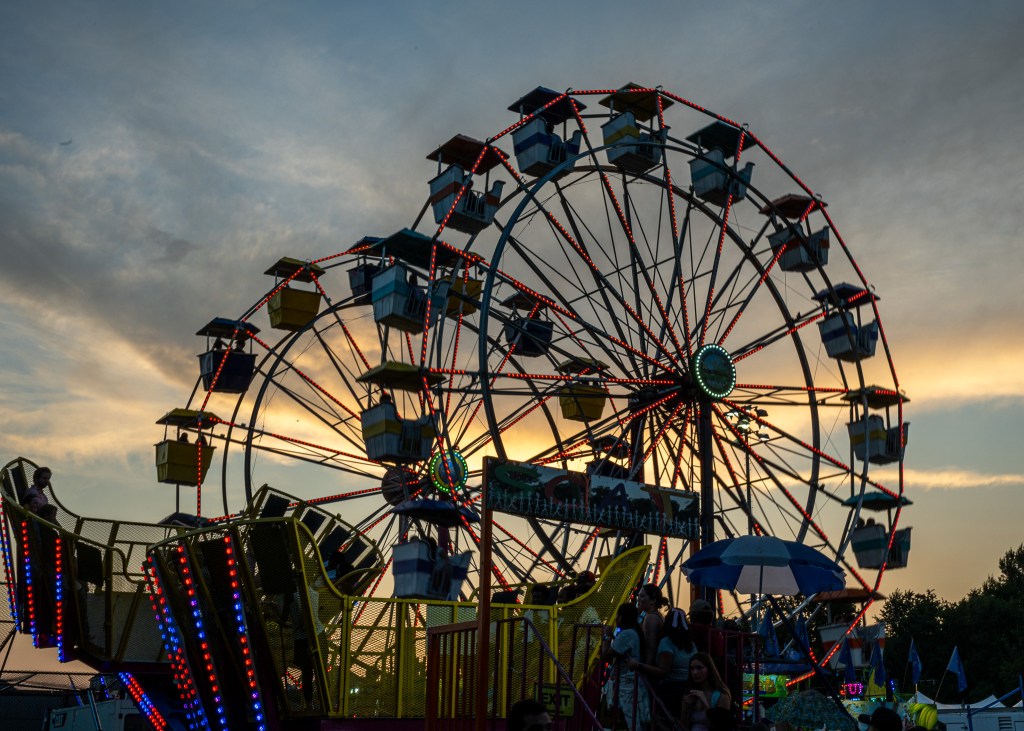
The Arlington County Fair took place this weekend and it was the third year that this photographer attended the event, but his first with an actual emphasis on quality photography.
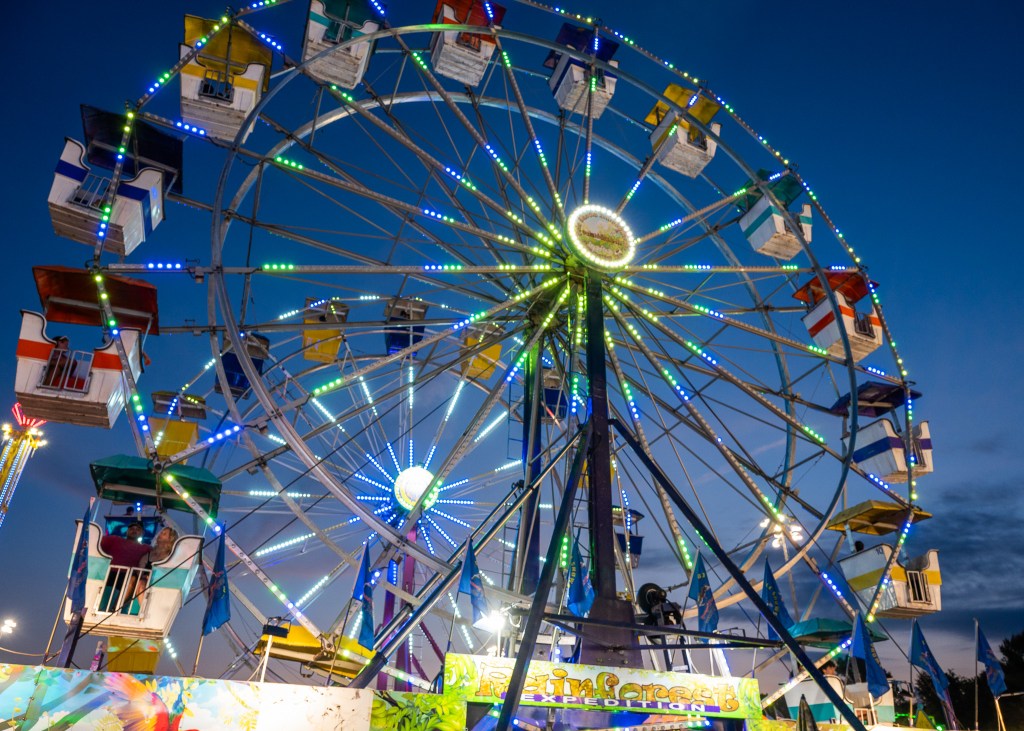


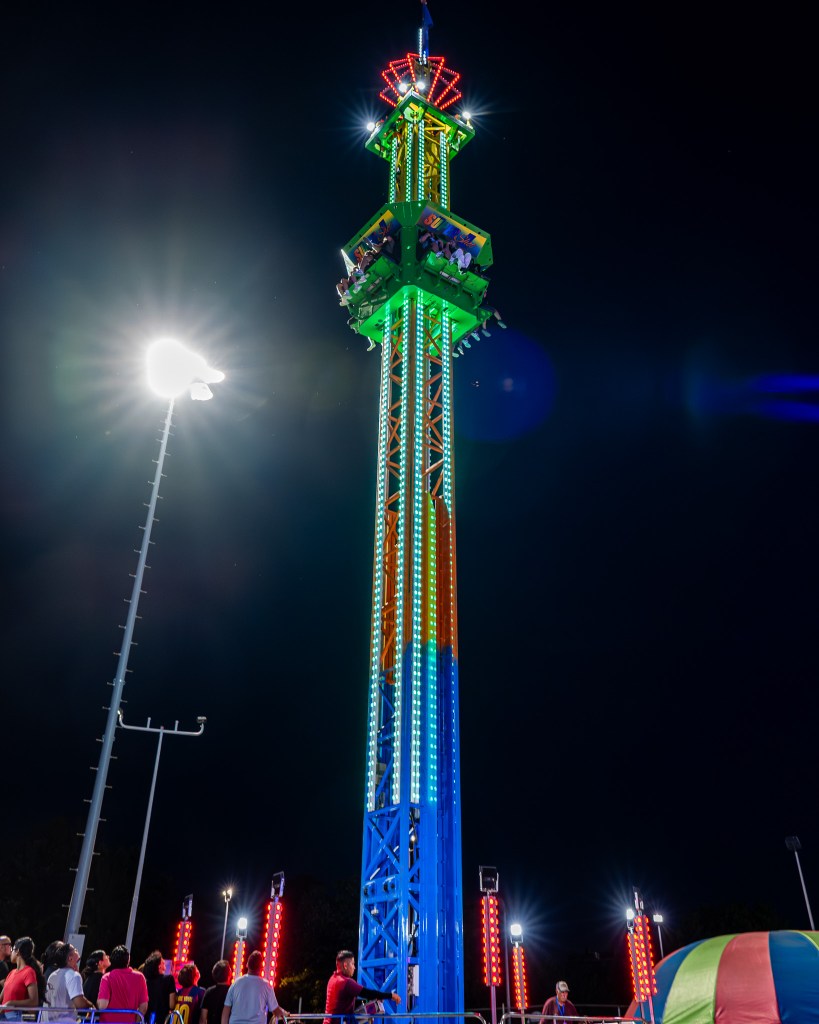

(Disclaimer: As a professional who receives compensation for paid photography work, none of my content is eligible for entry to open exhibit categories, so I figured why not use this as a bit of news/fair coverage and also some tutorials, or more so just talking about composing the shot and things to try.)

Vehicle electrification
The county is placing an increasing emphasis on adding electric vehicles to its fleet when the logistics work in favor of swapping from gas/diesel, or compressed natural gas/renewable natural gas in the case of its bus fleet.
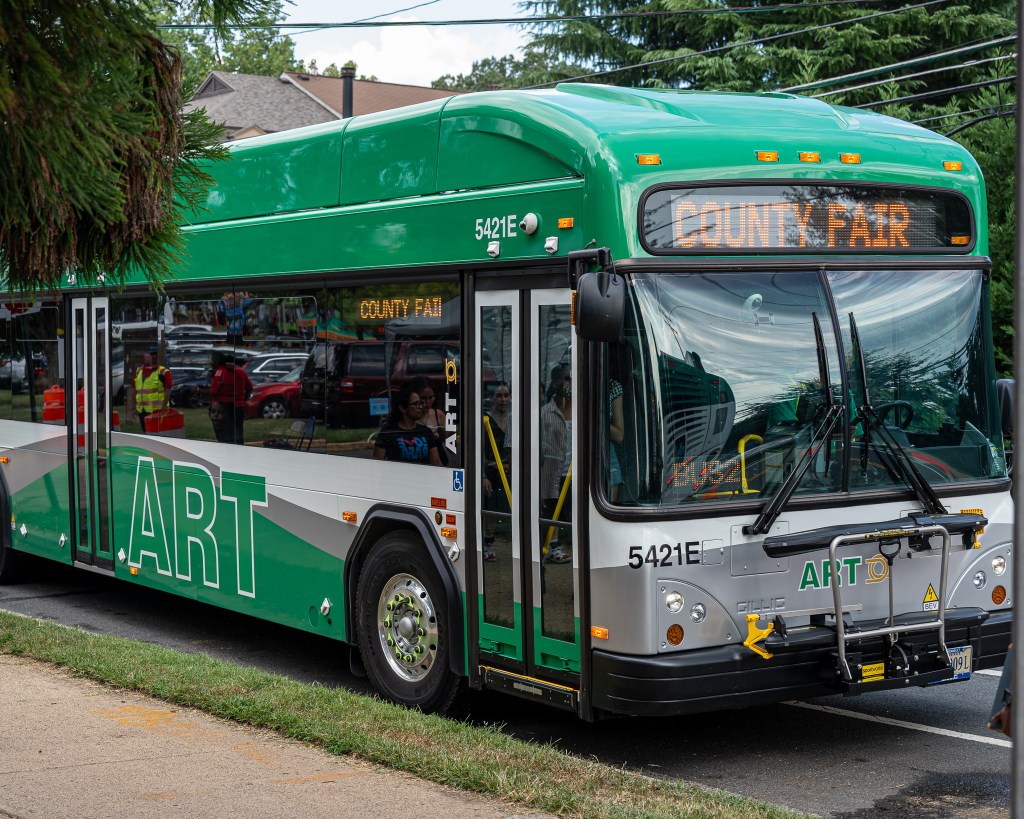
To show off the new Arlington Regional Transit (ART) electric buses that started passenger revenue service earlier this month, they were incorporated as part of the shuttle fleet taking patrons from the Ballston parking garage to and from the fair.
The ride was fairly smooth and uneventful. It was nice knowing the driver could press the accelerator and know that power would be delivered almost instantly vs. older buses where a speed increase has a relatively long acceleration curve. For the afternoons when temperatures were in the 80s and pushing 90 degrees, one of the four buses was used as a cooling station for fairgoers.
Fun fact: In the 35-foot buses, the seats on the far left and far right side of the back row technically have extra legroom because of the way the seats over the wheel wells are mounted facing the aisle. It felt similar to sitting in an airplane’s exit row. Just use caution when getting out/up as it’s a tight squeeze between the seats and the roof is fairly curved until you’re standing in the aisle.
Musical acts
Finally, it wouldn’t be a proper post without at least one photo from some of the musical talent on hand, so here is an image from the Saturday night headliner Rock Creek Kings.
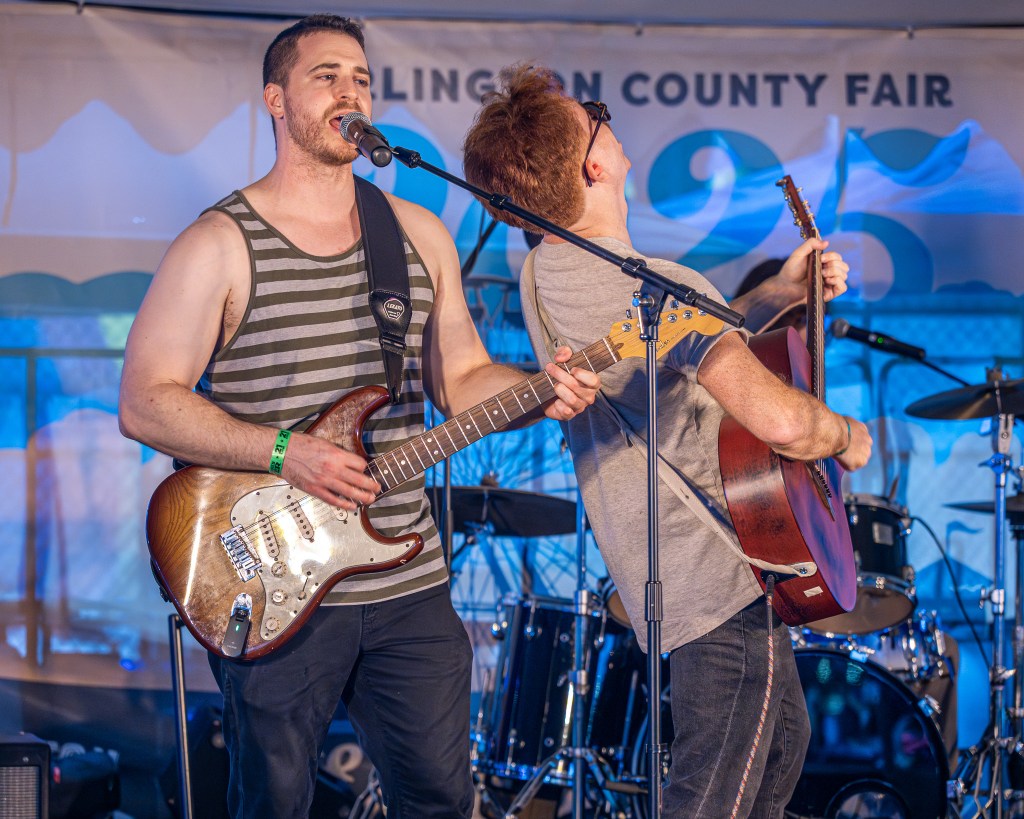
Photo tutorials
If you’re new to photography or wanting to learn more about the exposure triangle, county fairs make some quality places to put your learned knowledge into applied practical experience.
Shutter speeds
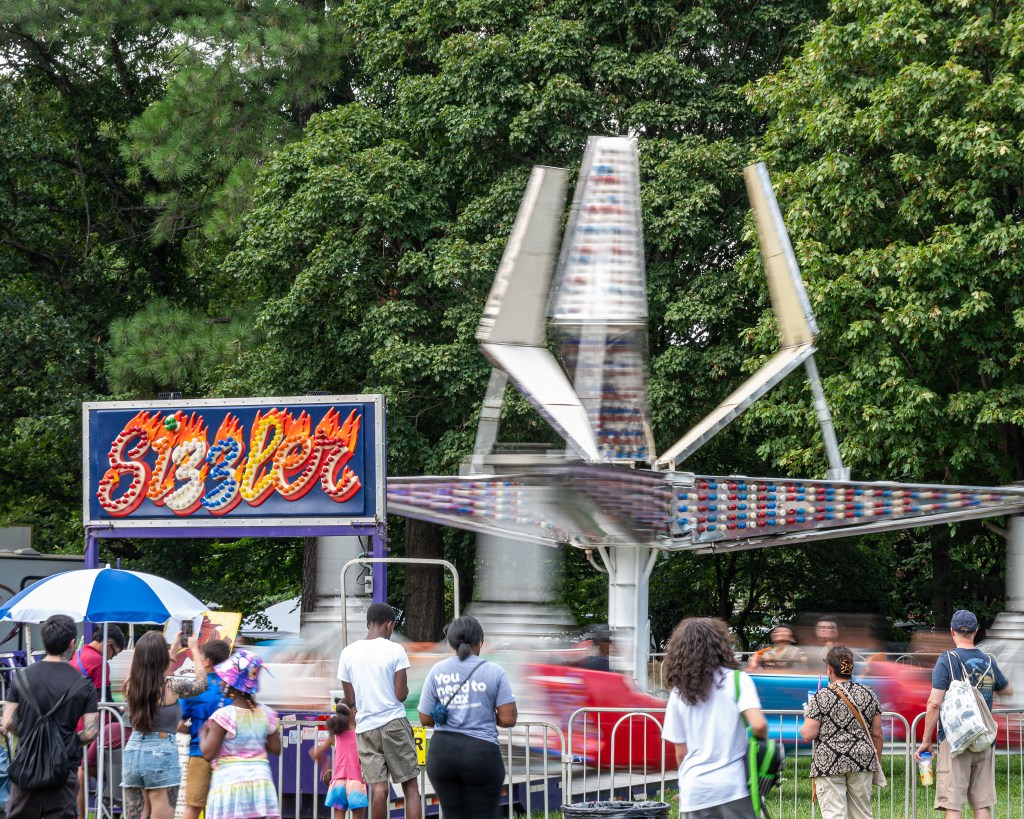
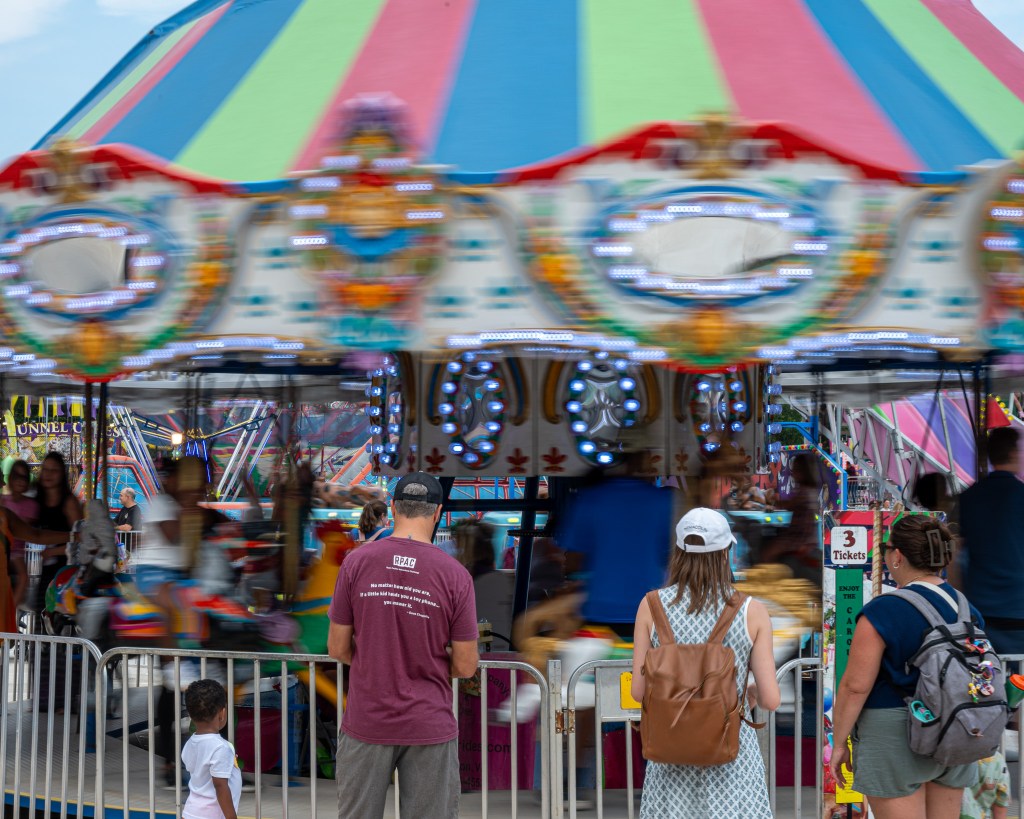
If you’re wanting to see how shutter speeds change your image, just find the nearest carnival ride and watch it for a few minutes. When you take your camera and compose the image, start with your shutter speeds in the hundredths of a second (1/400 or 1/250) and see how the image looks. Now drop it into tenths of a second (1/20, 1/40, 1/80, etc.) and see how that changes it. Are you seeing motion blur? But more importantly, does it look good? Some motion can really add excitement to the image but too much can be a depiction of a blurry mess. How do you know if you’ve gone too far? Trial and error.
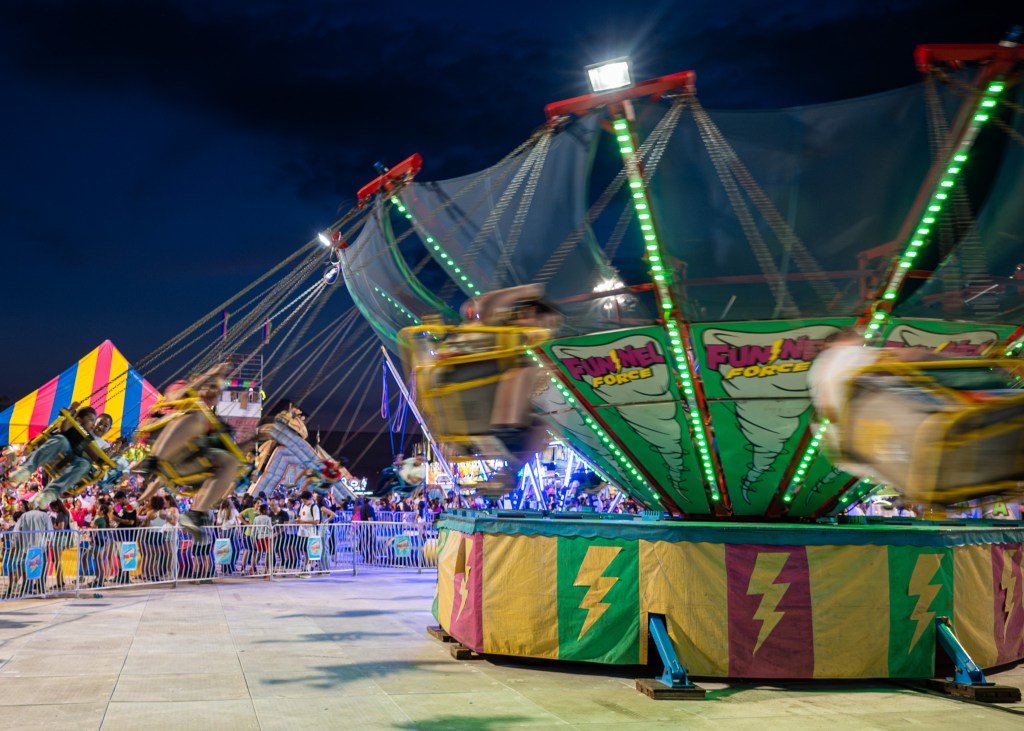
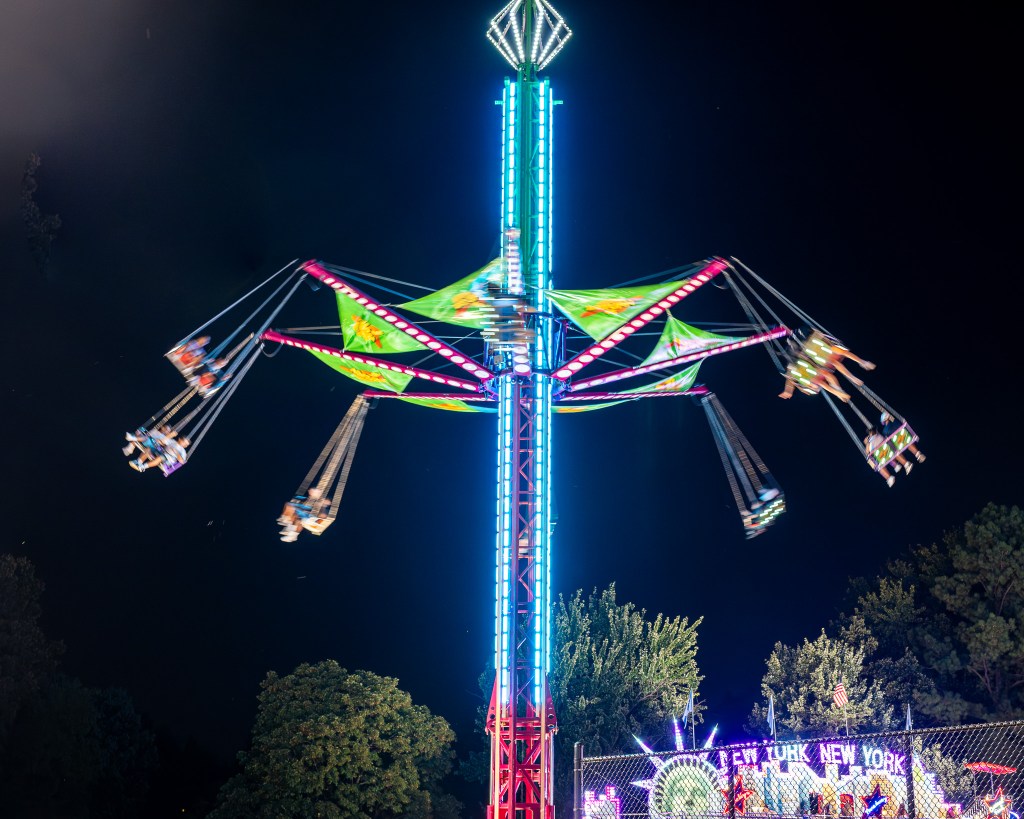
A quick note for the above photo that I did have to use the healing brush in the dark background behind the ride in the top left corner because of a giant green-ish spot in the background caused by some excess light from the field lighting off-image. Similar to what was happening in some of the other nighttime photos above.
Depth of Field
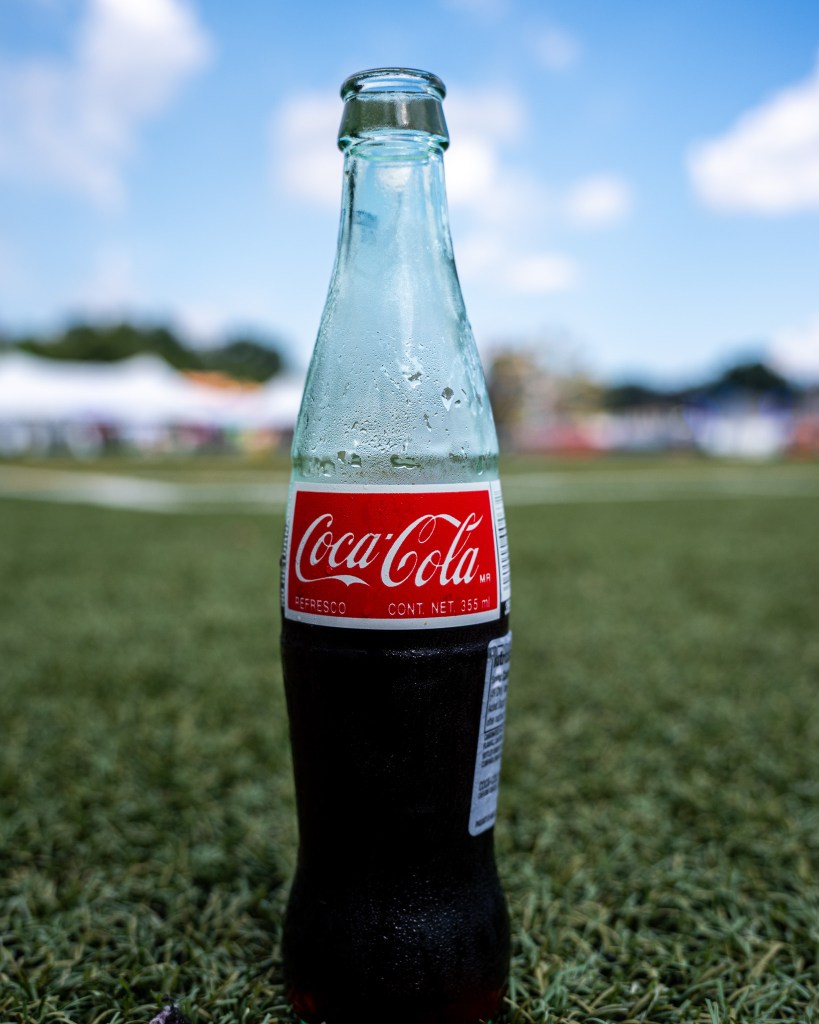
A shoutout to Bayron at Portal Maya for having bottles of Mexican Coke on hand for purchase when the photographer didn’t want to spend $10 at the fair rides vendor for a drink.
It also provides a pretty good subject for illustrating depth of field and how when you get as close as possible to your subject with a wide open aperture you can get a super blurry, quality bokeh in the background of your image.

We see a similar effect here at this carnival game with these light-up sword prizes. The sword on the right in the foreground is sharp and the background is less in focus, although not quite as distinct as the previous example.
High ISO / Noisy Photos
Back in the old days of film, the ISO was based on the type of film and it was usually pretty low (ISO 400, ISO 800, etc.). But if you’re using a digital camera made within the past decade or so, you’re shooting images in a format like RAW (NEF on Nikon, CR2/CR3 on Canon, etc.), and you’re processing in a photo editor like Adobe Lightroom with AI denoise, then do not be afraid to increase the ISO to get the desired image.
For this next image of smoked turkey legs, this was accidentally captured at ISO 8000 and fixed later in post-processing. But it goes to show how well the image can be cleaned up.
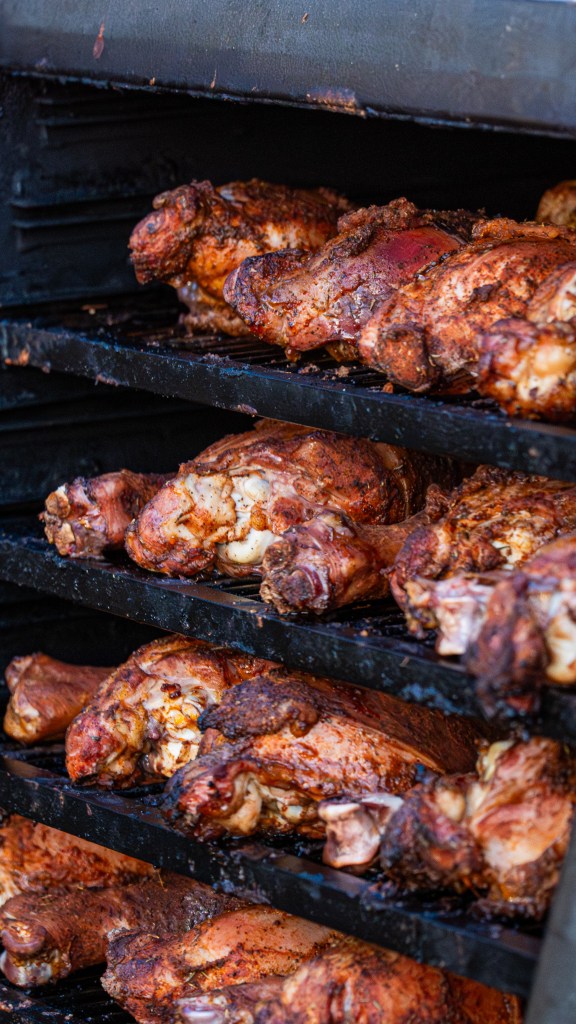
The important thing is making sure that the subject is lit well enough. You could still have problems when using high ISO if the exposure isn’t quite right or if you’re dealing with a lot of colorful shadows.
Until next year, Arlington County Fair.